Staff Report
The long-standing geopolitical equilibrium in the South Caucasus is facing its most significant challenge in decades as Moscow signals a sharp shift in its tolerance toward Yerevan. Russian President Vladimir Putin has effectively issued a final warning to Armenian leadership regarding their recent pivot toward Western institutions. This diplomatic friction marks a departure from the historical security guarantees that once bound these two nations under a shared post-Soviet framework.
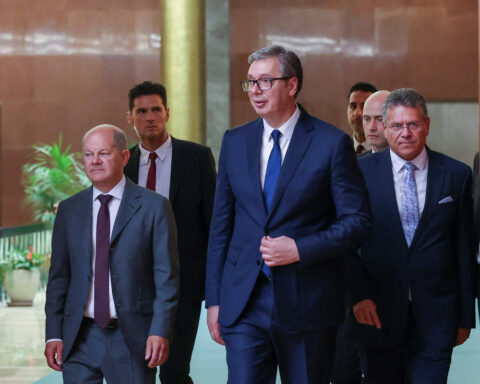
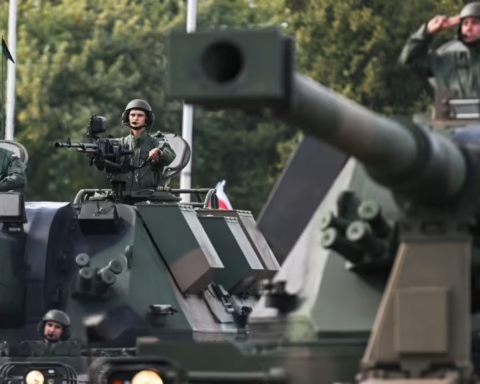
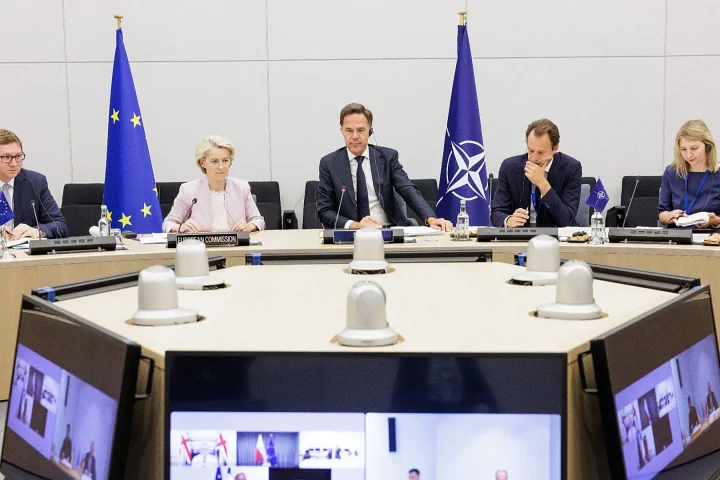
For years, Armenia has relied on Russia as its primary security guarantor, hosting Russian military bases and participating in the Collective Security Treaty Organization. However, the aftermath of recent territorial conflicts and a perceived lack of support from Moscow have prompted Prime Minister Nikol Pashinyan to seek alternative partnerships. This shift has culminated in high-level discussions between Armenian officials and European Union representatives, aiming to deepen economic cooperation and security dialogue.
The Kremlin views these developments as a direct threat to its sphere of influence. In recent statements, Russian officials have made it clear that Armenia cannot simultaneously benefit from Russian security umbrellas while actively courting Western military and political integration. The message from Moscow suggests that the era of multi-vector diplomacy may be coming to an end for the landlocked nation. If Armenia continues its current trajectory toward the European Union, it faces the potential loss of subsidized energy prices and the withdrawal of Russian border guards who currently patrol sensitive frontiers.
Economic implications are at the forefront of this escalating tension. Russia remains Armenia’s largest trading partner, and a significant portion of the Armenian diaspora resides within Russian borders. Any formal rupture in relations could lead to trade embargoes or stricter migration policies, which would immediately impact the Armenian economy. Despite these risks, the sentiment in Yerevan has shifted toward a desire for greater sovereignty and a diversification of international dependencies.
European leaders have responded to the situation with cautious optimism, offering support for democratic reforms and economic resilience programs. Yet, the European Union lacks the immediate military infrastructure to replace the security role traditionally played by Russia. This leaves Armenia in a precarious position, attempting to bridge the gap between its democratic aspirations and the harsh realities of regional geography.
As the deadline for this diplomatic ultimatum approaches, the international community is watching closely to see if Armenia will double down on its European path or seek a compromise with its traditional ally. The outcome will not only determine the future of Armenian sovereignty but will also serve as a barometer for Russia’s ability to maintain its influence over former Soviet states in an increasingly polarized global environment. For now, the pressure on Nikol Pashinyan continues to mount as he navigates the most difficult political tightrope of his career.