Staff Report
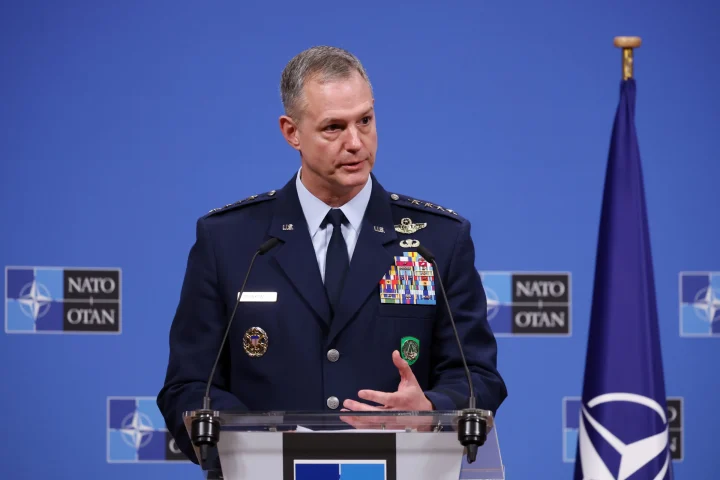
A fundamental shift is taking place within the corridors of power in Washington as policy advisors and military planners begin to reevaluate the long-standing commitment of the United States to the North Atlantic Treaty Organization. For decades, the foundational principle of the alliance has been the ironclad guarantee that American military might would serve as the ultimate deterrent against aggression in Europe. However, emerging strategic documentation suggests that the era of open-ended military support may be transitioning toward a more conditional framework.
This recalibration is driven by a complex set of geopolitical pressures and domestic fiscal realities. Senior officials are increasingly vocal about the need for European nations to achieve true strategic autonomy, moving beyond simple rhetoric into the realm of independent defensive capabilities. The primary concern among American strategists is the possibility of being overextended in a multi-theater conflict. With rising tensions in the Indo-Pacific and persistent instability in the Middle East, the Pentagon is forced to make difficult decisions regarding the allocation of high-end assets and personnel.
Internal discussions indicate that future American support during wartime might look significantly different than it has in the past. Rather than providing the bulk of conventional ground forces, the United States may pivot toward a supporting role that emphasizes intelligence sharing, cyber defense, and logistical coordination. This would place the primary burden of territorial defense and conventional warfare squarely on the shoulders of European member states. This is not merely a budgetary dispute over the two percent spending target; it represents a conceptual change in how the United States views its role as the global security guarantor.
The implications for European capitals are profound. If the United States follows through on plans to reduce its wartime commitment, nations like Germany, France, and Poland will need to accelerate their military modernization programs at an unprecedented pace. There are concerns that without the full weight of the American military machine, the credibility of Article Five could be undermined. Critics of this shift argue that any perceived retreat by Washington could embolden adversaries and lead to a fragmented security environment where individual nations pursue their own interests at the expense of collective stability.
Proponents of the change argue that this is a necessary evolution for a mature alliance. They suggest that the current model, established during the Cold War, is no longer sustainable in a multipolar world. By signaling a more limited commitment, Washington hopes to compel its allies to take their own defense requirements more seriously. This ‘tough love’ approach is intended to create a more resilient and balanced alliance where the United States is a partner rather than a permanent protector.
As these discussions move from theoretical white papers to actionable policy, the diplomatic fallout is already being felt. Traditional allies are seeking clarifications on what specific scenarios would trigger a full American response and which would be left to regional powers. The uncertainty itself serves as a catalyst for a new armaments race within Europe, as countries scramble to fill the capabilities gaps that would be left by a reduced American presence. From heavy armor to long-range missile systems, the demand for indigenous European defense production has never been higher.
Ultimately, the reshaping of this relationship will define the global security landscape for the next half-century. Whether this transition leads to a stronger, more independent Europe or a more vulnerable and divided West remains to be seen. What is clear is that the days of assuming the United States will always provide the lion’s share of NATO’s combat power are coming to an end. The alliance is entering a period of significant introspection, where the very definitions of commitment and collective defense are being rewritten to fit a new and more volatile century.