Staff Report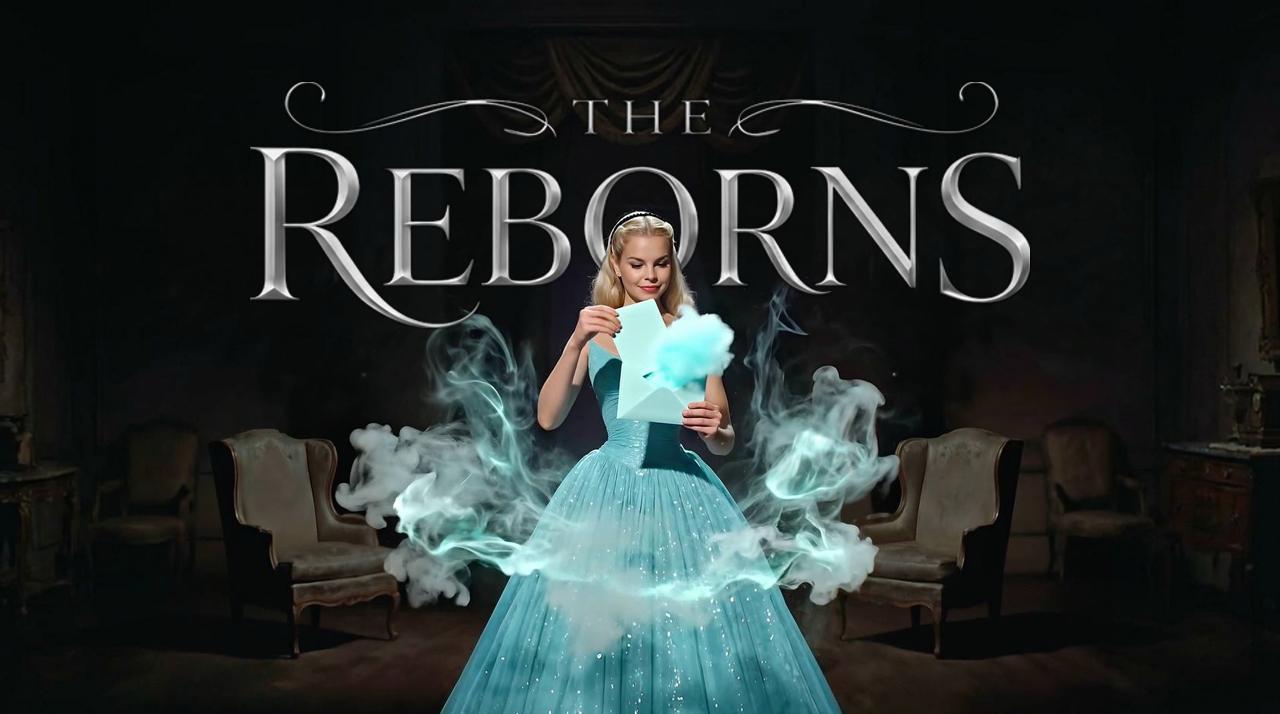
The red carpet at Cannes has seen countless dreamers walk it, but on the evening of May 21, 2026, something genuinely unprecedented happened. A film born not from traditional cameras and crews, but from the bold marriage of human imagination and artificial intelligence, took home one of the festival’s most talked-about honors.
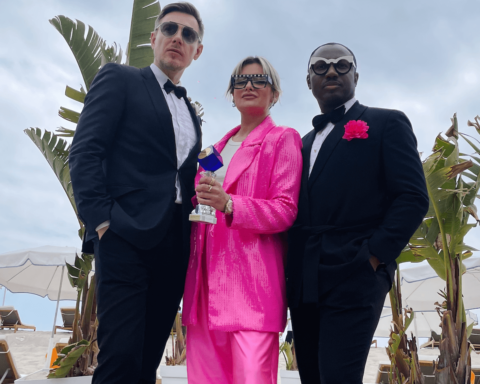
The Reborns — Cinderella, produced by Dubai-based studio IFREE ART SOLUTIONS and presented by visionary filmmaker Vladimir Kedrinsky, was awarded the Special Prize at the AI Film Awards Festival — a moment that felt less like an award ceremony and more like the opening pages of a new chapter in cinema history.
For decades, Cannes has been the place where bold filmmakers test the limits of what a movie can be. Truffaut, Tarantino, Almodóvar, Bong Joon-ho — all walked these same steps. But on this particular evening, the air felt different. The audience filing into the theater wasn’t just there to see a film. They were there to witness a transition. The kind of moment that happens once in a generation, when a new medium quietly insists it belongs at the grown-ups’ table.
A Storyteller in His Element
Standing on stage with the trophy in hand, Kedrinsky didn’t speak like a man who had simply made a movie. He spoke like someone who had cracked open a door the rest of the industry has only been peeking through.
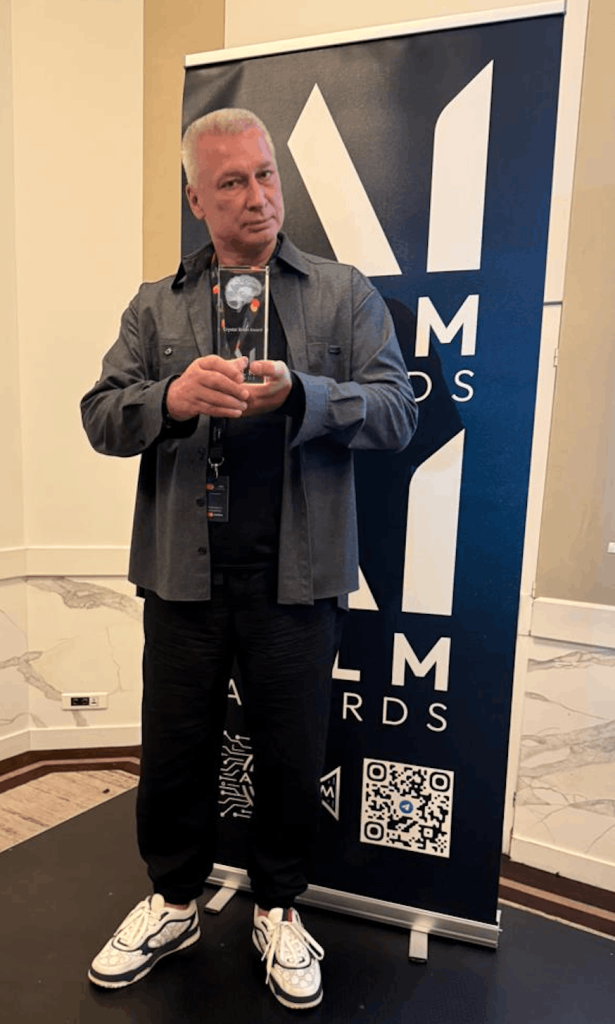
“The Reborns — Cinderella is not just a film — it is a statement about how artificial intelligence can breathe new life into timeless storytelling. Receiving this Special Prize at Cannes is a validation of everything we believe at IFREE ART SOLUTIONS.”
What’s so striking about his words isn’t the technological pride. It’s the reverence for the craft itself. Kedrinsky doesn’t talk about AI like an engineer talks about a product launch. He talks about it the way a poet talks about a new language — with a kind of hushed wonder, as though he can hardly believe what’s now possible.
A Fairy Tale With Teeth
The film itself is a wickedly clever social satire — a modern Cinderella who stumbles onto a mysterious island and finds herself swept into a secret masquerade ball that echoes the dreamlike eroticism of Eyes Wide Shut. What begins as a fairy tale curdles into a sharp meditation on fame, transformation, and the price of becoming someone the world watches.
There is no fairy godmother here, no enchanted pumpkin. Instead, there is an algorithm of fate, a current of strangers, a slow seduction by influence and image. By the time the credits roll, our heroine is no longer the girl who arrived. She is a brand, a face, a voice the world cannot look away from. And we are left to wonder — is that a triumph or a tragedy?
It is the kind of question only a fairy tale can ask. And only a fairy tale rewritten for our age can answer.
The Audience Felt It
You could hear it in the silence between scenes. You could feel it in the way the crowd lingered in their seats after the lights came up, reluctant to break the spell. By the time the Special Prize was announced, the applause wasn’t merely polite — it was urgent, the sound of an audience that knew it had just glimpsed the future.
And the future, it turns out, looks an awful lot like a fairy tale — just one being whispered in a brand-new voice.
Read More on MONTCEAU NEWS