Staff Report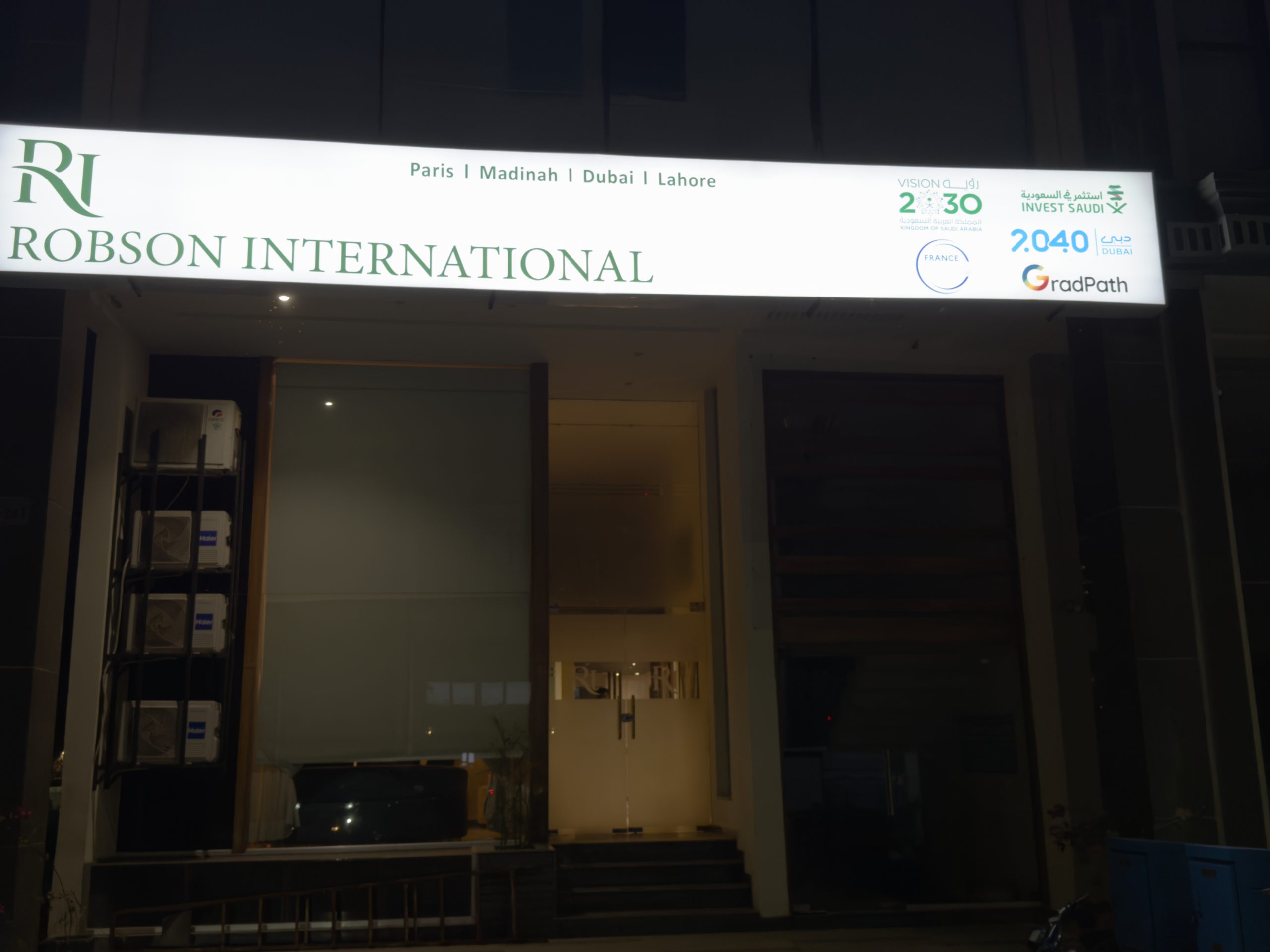
A company can be perfectly formed and completely invisible. The difference is decided long before the licence is issued.
Every market entry conversation eventually arrives at logistics. Which licence. Which free zone. Which bank. Which visa category, which auditor, which office. These are real questions and they have correct answers, and a founder can get every one of them right and still end the year with a fully compliant company that nobody has heard of and nobody needs.
So Robson International starts somewhere else. Before the structure, before the licence, before a single form is filed, the firm puts one question on the table and refuses to move past it.
Who are you, in this market, to a buyer who has never heard of you?
It is an unglamorous question. It is also the one that quietly decides everything that follows.
What the Question Actually Decides
A founder who cannot answer it will still be able to incorporate. What they will not be able to do is price with conviction, because pricing is a claim about where you sit relative to everyone else in the room. They will not choose a licence category cleanly, because the category follows the commercial model and the model follows the position. They will struggle to pick an office location, write a pitch deck that lands, or recruit an executive of any real calibre, because credible people join a story they can repeat to their own network.
Positioning is not the decorative layer applied once the business is running. It is the load-bearing decision that the licence, the hiring plan, the brand and the capital requirement all rest on. Get it right and the operational questions start answering themselves. Get it wrong and you spend two years and a great deal of money discovering that the company was well formed and badly aimed.
Businesses rarely fail in a new market because the paperwork was wrong. They fail because nobody in the room had a reason to take them seriously.
Why the Large Firms Answer It Differently
The global consulting establishment, the KPMGs and PwCs and Accentures of the world, solved a genuine problem. They gave large enterprises a single professional relationship spanning strategy, compliance, finance and technology. What they never solved is the founder-scale version of that problem. The entrepreneur with real capital and real ambition who needs the same integrated thinking, and who does not want to become line item 47 in a global engagement.
Robson occupies that gap on purpose. The disciplines are recognisable. Market entry strategy. Feasibility studies and research. Positioning and brand architecture. Financial advisory, accounting, audit and tax. Regulatory compliance and government relations. Digital marketing and lead generation.
What differs is the density of the relationship. A Robson client is not routed through a partner, an engagement lead and three analysts. They deal with a small senior team accountable in every market the firm serves, measured on whether the business works rather than on whether the deliverable was submitted.
The work is honest about its limits. Nobody at Robson pretends a feasibility study creates demand. What a good one does is tell a founder the truth early, while the truth is still cheap.
Working the Question Forward
The temptation is to answer the positioning question backward from ambition. We want to be the premium player, therefore we are. Robson works it forward from evidence instead, through feasibility research, competitor mapping and market intelligence, until the answer is something a buyer would actually agree with.
Then the firm builds that answer into everything the business is. Brand identity, market strategy and executive profile are not three services stacked in a proposal. They are one argument made in three registers, and the argument only holds if the same claim survives translation from the deck to the licence to the hire to the invoice.
This is where the firm becomes genuinely unusual. Robson builds the executive team and the executive profile alongside the company. Incorporating an entity in Dubai or Riyadh or Paris is one thing. Populating it with credible leadership, positioning that leadership publicly and giving the venture an institutional face it can raise, hire, partner and sell behind is another. Robson delivers turnkey businesses in the UAE that are licensed, fit-out ready and compliant from day one, and the same instinct runs through the advisory work. The deliverable is an operating, bankable business rather than a to-do list.
Two Regions Where the Question Has Different Answers
Robson concentrates on Europe and the Gulf because the two regions reward opposite postures, and the positioning question resolves differently in each.
The Gulf is building, and it rewards speed and visible commitment. Saudi Arabia’s Vision 2030 is channelling more than a trillion dollars through the Public Investment Fund into a kingdom being remade, with NEOM, Diriyah, the Red Sea and Qiddiya reshaping tourism, leisure, heritage and housing. The Kingdom’s Premium Residency reform has dismantled the old sponsorship system, foreign nationals may now own a Saudi company outright through the Ministry of Investment with no local partner, and the Real Estate Ownership by Non-Saudis Law, in force since January 2026, has opened genuine property ownership to international buyers for the first time, with qualified rights extending to Muslim buyers in Makkah and Madinah. Alongside it, the Dubai 2040 Urban Master Plan is a government mandate to expand every commercial, tourism and residential frontier, in a jurisdiction offering full foreign ownership and zero personal income tax.
Europe is consolidating, and it rewards legitimacy and patience. France’s Talent permit welcomes founders and investors into the heart of the European Union with a multi-year renewable card that carries the family alongside and opens a path to French and EU citizenship. Switzerland holds wealth the way few nations can, through expenditure-based residency and a corporate framework built on stability and discretion. Greece converts qualifying property into European residency with no minimum stay obligation. Monaco offers zero personal income tax and an address with few peers.
Most serious cross-border strategies need both. Growth in one hemisphere, security in the other. Robson advises on the pair rather than the parts.
The Private Client Version of the Same Question
For individuals, the firm’s wealth management vertical covers global residency, cross-border structuring and citizenship by investment, including the established Caribbean programmes in Grenada, St Kitts and Nevis, Antigua and Barbuda, and Dominica. Grenada carries a distinction that is commercial rather than sentimental, as the only Caribbean nation with a United States E-2 investor treaty, a route for its citizens to live and run a business in America.
The framing Robson uses is worth borrowing. A second passport is sovereign equity, not sovereign debt. It belongs on the personal balance sheet, and it should be chosen the way any serious asset is chosen, against the life the holder actually intends to lead rather than the brochure they happened to be shown. The question, once again, is not which document is best. It is which document is right for you.
What Comes After the Answer
The industry norm is to open a door and step back. Robson’s founder, Arsalan Khan, built the firm on the opposite conviction, that ambition deserves a partner who stays.
That is why the answer to the positioning question is not the end of the engagement. It is the brief for it. Eleven years, more than 1,100 clients and a presence across four countries have taught the firm that the market entry is the easy half. The position is what has to be defended once the company is running, the team is hired, the first customer is signed and the second market is already in view.