 Staff Report
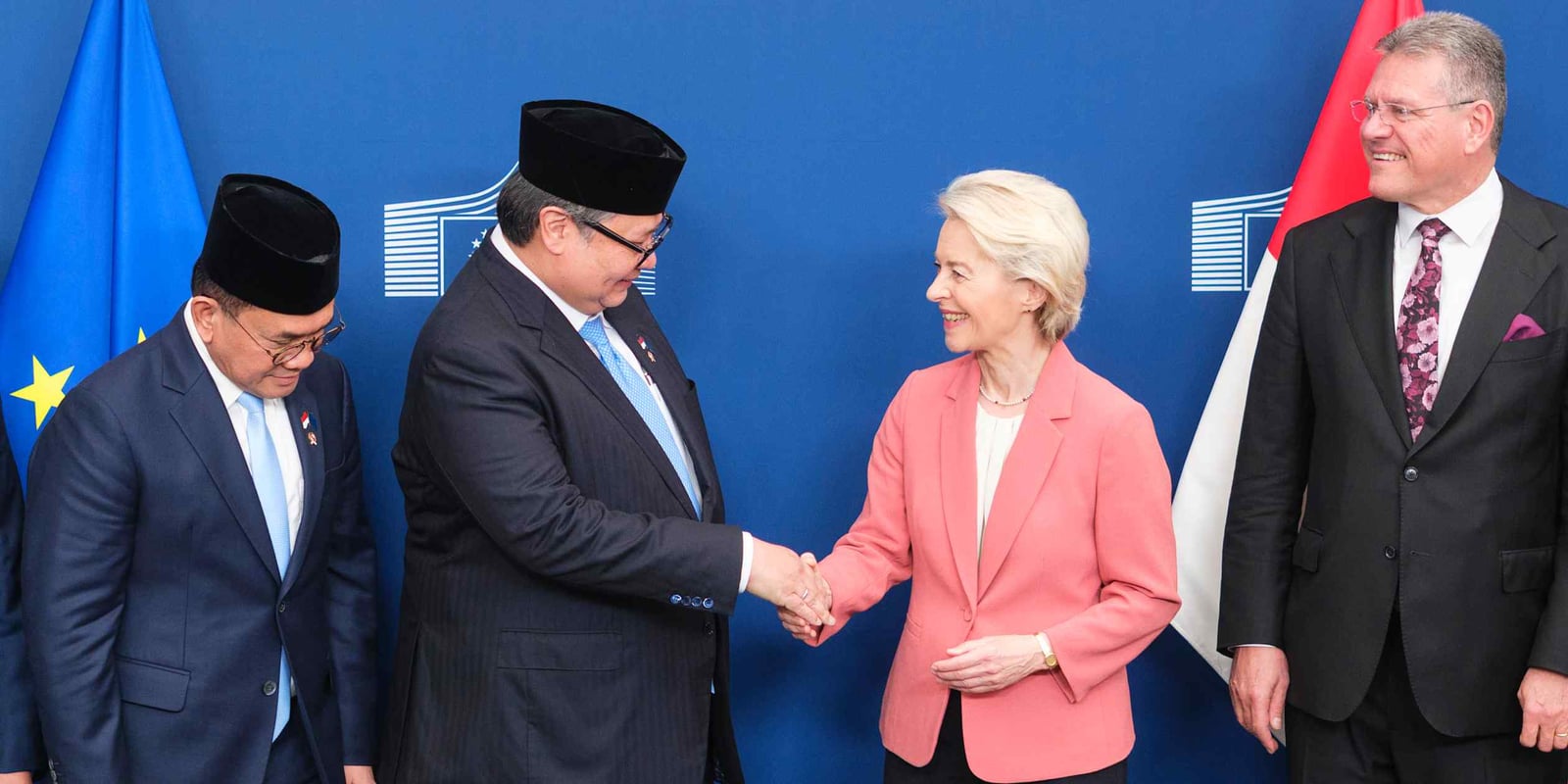
Indonesia and the European Union signed a comprehensive economic partnership agreement in Brussels on November 21, capping nearly a decade of negotiations. Officials on both sides hailed the pact as one of the most ambitious trade deals the EU has struck in Asia, yet Indonesian exporters are watching the calendar closely because a delayed ratification could mean a sudden jump in tariffs.
The Indonesia-EU Comprehensive Economic Partnership Agreement, together with a separate Investment Protection Agreement, is designed to deepen trade and investment ties between Southeast Asia’s largest economy and the EU’s single market. Together the two sides represent roughly 730 million people.
What the deal covers
Once in force, the agreement will eliminate tariffs on more than 98 percent of European exports to Indonesia and on more than 90 percent of Indonesian exports to the EU, according to official statements. Brussels estimates the deal will save EU exporters over 600 million euros a year in customs duties.
Indonesia’s top shipments to the bloc, including palm oil, footwear, textiles, garments and fisheries products, are expected to benefit. Some EU duties of 7 to 12 percent on Indonesian labor-intensive goods would fall to zero, potentially saving Indonesian exporters around 600 million euros annually in trade costs.
The pact also opens investment in strategic sectors such as electric vehicles, electronics and pharmaceuticals. Brussels projects that EU GDP will be 16 billion euros higher by 2042 than it would be without the agreement, while Indonesia’s economy could gain 27 billion euros over the same period.
The ratification race
Despite the celebratory signing, the deal cannot take effect until both sides complete ratification. Indonesia is aiming for January 1, 2027, but that date is tight. The European Parliament must approve the pact, and Indonesian authorities must complete their own domestic procedures.
The urgency is tied to Indonesia’s current preferential access under the EU’s Generalized System of Preferences, which expires on December 31, 2026. If the new agreement is not in place when the GSP lapses, Indonesian exports to the EU would revert to higher most-favored-nation tariff rates.
Indonesian Trade Minister Budi Santoso said the government wants ratification finished by December 1 or, at the latest, by the end of December. The EU is targeting completion of its own ratification process by mid-December. Both sides want to avoid any gap in preferential market access.
Exporters' concerns
Indonesian exporters have warned that a gap between the GSP expiry and the CEPA entry into force would create what some have called a sudden spike in tariffs. For industries that operate on thin margins, even a temporary return to MFN duties could disrupt orders and supply chains.
The government has said it has no fallback option and must complete ratification on schedule. President Prabowo Subianto has committed to pushing the process forward, and Indonesian officials have consulted lawmakers on a possible presidential regulation to speed approval.
Sustainability and palm oil
Palm oil and deforestation had long been sticking points in the negotiations. The final text includes a dedicated palm oil protocol and mechanisms for regulatory cooperation on sustainability issues, addressing some EU concerns while giving Indonesian producers a clearer path to the European market.
The agreement is also part of a broader EU strategy to diversify trade relationships amid tensions with the United States and China. For Indonesia, the deal offers a way to lock in preferential access to a major market and attract investment in higher-value manufacturing.
What happens next
The next two months will determine whether the agreement enters force as planned. If ratification keeps to schedule, the deal could become a template for EU engagement with other ASEAN economies. If it slips, Indonesian exporters may face a costly interval of higher tariffs just as the new year begins.