Staff Report
The geopolitical landscape of the twenty-first century is increasingly being defined by a bipolar competition between Washington and Beijing. As these two giants trade technological blows and maritime posturing, a quiet anxiety has begun to settle over the European continent. For decades, Europe positioned itself as a sophisticated arbiter of international norms and a regulatory titan, yet the current shift toward raw industrial policy and military expansionism has left the European Union searching for a renewed sense of purpose.
The economic disparity between the United States and the Eurozone has widened significantly over the last decade. Since the 2008 financial crisis, the American economy has outpaced its European counterparts in terms of innovation, venture capital investment, and the development of foundational technologies. While Silicon Valley birthed the titans of the social media and artificial intelligence eras, Europe largely focused on the necessary but defensive posture of regulation. The result is a continent that excels at protecting consumer data through frameworks like GDPR but lacks the domestic corporate champions required to compete on the global stage.
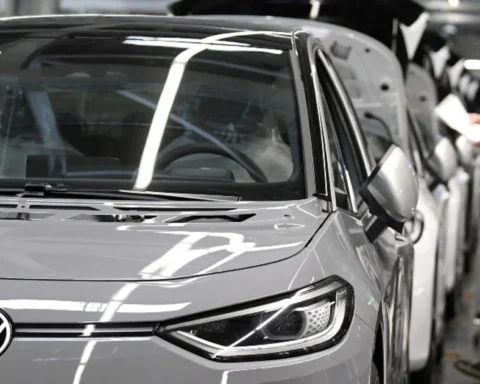
Energy security has further complicated Europe’s standing. The conflict in Ukraine exposed a profound vulnerability in the European industrial model, which for years relied on inexpensive Russian gas to power German factories. With that supply chain severed, European manufacturers face significantly higher overhead costs than their American rivals, who benefit from domestic shale gas, or their Chinese competitors, who enjoy heavy state subsidies. This energy price gap is driving a wave of deindustrialization that threatens the very social contracts upon which European democracies are built.
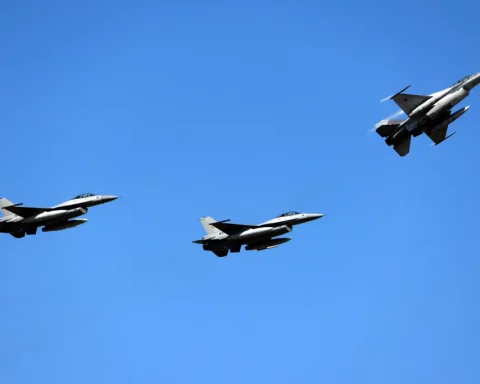
Militarily, the situation is equally precarious. While the United States remains the primary guarantor of security through NATO, the pivot toward the Indo-Pacific has forced European capitals to confront their own defense inadequacies. Transitioning from a ‘peace dividend’ mindset to one of active rearmament is a slow and politically fraught process. The lack of a unified European military command or a consolidated defense industry means that spending remains fragmented and inefficient compared to the streamlined military-industrial complexes of the two superpowers.
However, it would be a mistake to dismiss Europe entirely. The European Union remains the world’s largest single market, and its soft power through diplomacy and trade standards remains formidable. The challenge lies in whether the bloc can achieve ‘strategic autonomy.’ This concept, championed frequently by French leadership, suggests that Europe must develop the independent capacity to defend its interests without relying solely on the whims of the American electoral cycle or the pressure of Chinese investments.
To reclaim a seat at the main table, Europe must move beyond being a mere theater of competition for others. This requires a radical overhaul of internal investment strategies. The recent Draghi report on European competitiveness highlighted the need for hundreds of billions of euros in annual investment to close the productivity gap with the United States. Without a collective fiscal response and a genuine union of capital markets, the continent risks becoming a museum of past greatness rather than a laboratory for the future.
As the rivalry between China and America intensifies, the world is moving toward a new era of protectionism and bloc-based economics. If Europe continues to operate as a loose collection of twenty-seven distinct national interests rather than a cohesive economic powerhouse, its influence will continue to wane. The coming decade will determine if the continent can forge a third way or if it will be relegated to the status of a secondary player in a world dominated by the Pacific powers.