Staff Report
The Eurogroup president Paschal Donohoe has issued a stark assessment of the current economic climate as global oil prices surge past the symbolic threshold of one hundred dollars per barrel. Addressing a gathering of finance ministers in Brussels, Donohoe emphasized that the European Union is entering a period of significant trial that will require disciplined fiscal policy and a unified approach to energy security. The sudden spike in energy costs has reignited fears of persistent inflation and a potential slowdown in the fragile recovery following years of market volatility.
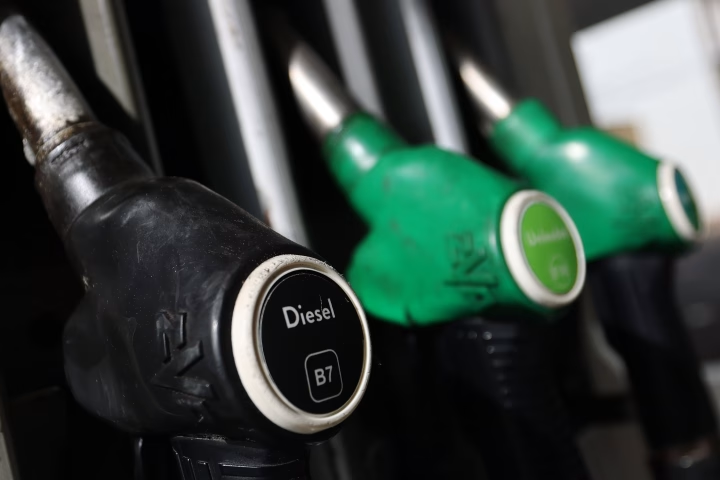
Energy markets have reacted sharply to supply constraints and geopolitical tensions, pushing crude oil to levels not seen in months. For the Eurozone, which remains a net importer of fossil fuels, this price hike functions as a direct tax on consumers and businesses alike. The increased cost of transport and manufacturing threatens to erode the purchasing power of households, putting pressure on the European Central Bank to maintain its restrictive monetary stance despite concerns about slowing industrial output.
During his remarks, Donohoe noted that the resilience of the single currency area is being put to the test by forces largely outside of the continent’s immediate control. However, he maintained that the current policy framework is designed to withstand such shocks. He argued that while the headline figures are concerning, the collective fiscal buffers built up over recent quarters provide a necessary safety net. The challenge for policymakers now lies in balancing the need for targeted support for vulnerable citizens without inadvertently fueling the inflationary fire through excessive government spending.
Economists are closely watching how this energy price surge will impact the broader inflationary trajectory. Many had hoped that the era of aggressive interest rate hikes was coming to an end, but if oil remains above the triple-digit mark, the timeline for potential rate cuts may be pushed back significantly. This creates a difficult environment for the Eurogroup, as member states face varying degrees of exposure to energy prices. Countries with heavy industrial bases are particularly sensitive to these shifts, leading to calls for more aggressive investment in renewable alternatives to break the dependency on global oil markets.
In addition to the immediate economic impact, the rise in oil prices has significant political implications. Governments across the Eurozone are facing public pressure to intervene and lower fuel prices at the pump. Donohoe cautioned against broad-based subsidies that could distort the market or undermine long-term climate goals. Instead, he advocated for a strategic focus on efficiency and the acceleration of the green transition as the only sustainable way to protect the European economy from future price shocks in the global energy sector.
As the meeting concluded, the consensus among finance ministers remained focused on stability. The Eurogroup intends to monitor the situation weekly, prepared to adjust their fiscal guidance if the energy crisis deepens. For now, the message from Brussels is one of cautious vigilance. The coming months will reveal whether the internal structures of the Eurozone are robust enough to navigate this latest headwind or if the persistent pressure of high energy costs will force a more fundamental rethink of European economic strategy.