Staff Report
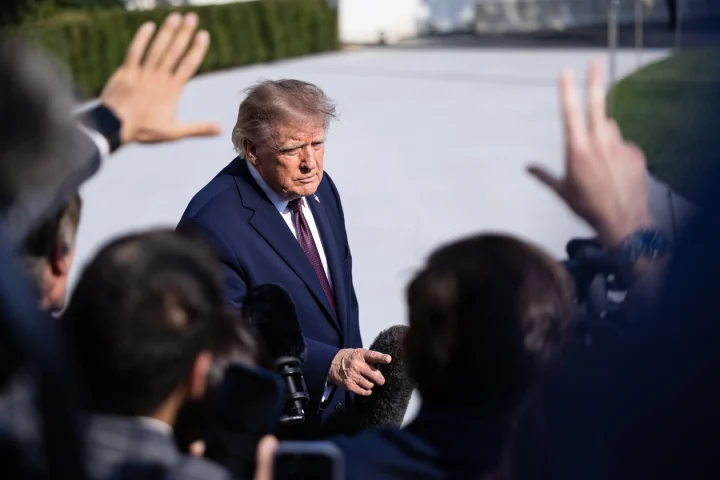
Tokyo is currently undergoing a significant recalibration of its foreign policy as Japanese officials increasingly look toward European capitals to diversify their security and economic partnerships. This strategic pivot follows growing apprehension within the Japanese government regarding the potential return of Donald Trump to the White House and the transactional approach to diplomacy that characterized his previous term. While the United States remains Japan’s primary security guarantor, the prospect of renewed American isolationism or sudden shifts in trade tariffs has prompted Prime Minister Fumio Kishida’s administration to seek more stable, long-term commitments elsewhere.
Japanese diplomats have been particularly active in Brussels, London, and Paris over the recent months, emphasizing shared values and the necessity of a rules-based international order. The objective is not to replace the alliance with Washington, which remains the cornerstone of Japanese defense, but to create a secondary layer of cooperation that can withstand political volatility in North America. This effort includes deepening defense industrial ties, such as the Global Combat Air Programme with the United Kingdom and Italy, which represents a historic departure from Japan’s traditional reliance on American defense contractors.
On the economic front, Japan is prioritizing the strengthening of supply chains with European partners to reduce dependencies that could be leveraged during trade disputes. Memory of the previous Trump administration’s threats to impose national security tariffs on Japanese automotive exports remains fresh in the minds of policymakers in Tokyo. By integrating more closely with the European Union’s regulatory framework and trade networks, Japan hopes to gain collective bargaining power and ensure that its economic interests are not solely at the mercy of shifting political winds in the United States.
Furthermore, the geopolitical situation in the Indo-Pacific has forced Japan to reconsider the breadth of its security network. With the rise of regional tensions, Tokyo views European naval presence and maritime cooperation as a vital component of its broader strategy to maintain a free and open region. Recent joint military exercises with European nations signify a new era of engagement where security is no longer viewed through a strictly bilateral lens. These maneuvers serve as a signal to both allies and adversaries that Japan is successfully building a multilateral coalition of democratic partners.
Domestic political analysts in Japan suggest that this European outreach serves as a necessary insurance policy. While the Japanese public remains broadly supportive of the U.S. alliance, there is a growing consensus that the era of predictable American leadership has transitioned into an era of uncertainty. By fostering deeper ties with the European Union and individual European powers, Japan is positioning itself as a central hub in a global network of middle powers that can maintain international stability even if the United States retreats from its traditional global role.
Ultimately, the success of this strategy will depend on the willingness of European nations to commit resources to the Far East while they are simultaneously preoccupied with security concerns in Ukraine. However, for Japan, the risk of inaction is far greater than the challenge of building these new bridges. As the American election cycle approaches, Tokyo’s diplomatic machinery is working overtime to ensure that no matter the outcome in November, Japan will not find itself isolated on the world stage.