Staff Report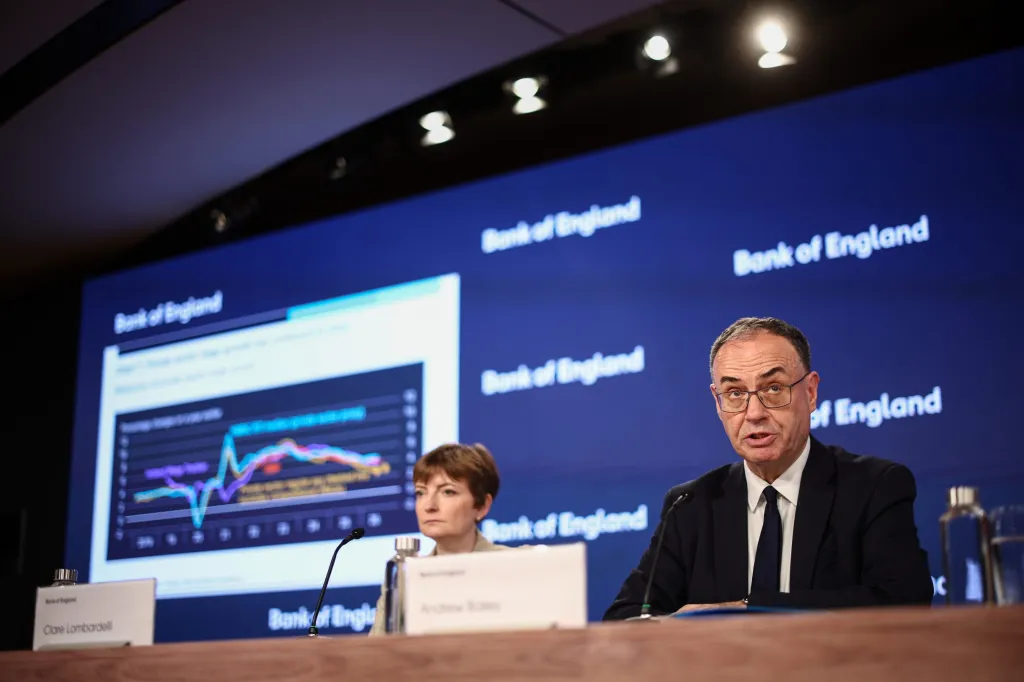
The Bank of England’s Monetary Policy Committee has once again opted to maintain its key interest rate at 3.75%, marking the fifth consecutive meeting where the rate has remained unchanged. This decision, reached after a 6-3 vote, comes despite a recent, larger-than-anticipated dip in the inflation rate, offering policymakers a brief reprieve to evaluate the broader economic implications of renewed conflict in Iran. This 3.75% benchmark has been in place since December, following a series of four rate reductions earlier in 2025.
This split within the committee underscores a growing global quandary faced by central banks: how to effectively manage persistent inflation while navigating the unpredictable economic fallout from geopolitical events. Just a day prior, the U.S. Federal Reserve, under Chairman Kevin Warsh, similarly held its key rate within a range of 3.5% to 3.75%, with Warsh emphasizing the Fed’s readiness to intervene if inflation spirals further. The Bank of England committee itself acknowledged the “uncertain” impact of the energy shock on the UK economy, noting that the necessary interest rate adjustments would hinge on the “scale and duration of the shock, and how it propagates through the economy.”
Three dissenting policymakers, however, argued for a quarter-point rate hike, pushing the rate to 4%. Their concern centered on the potential inflationary effects of the recent surge in energy prices, even as previous price spikes related to the conflict had not yet translated into widespread wage or price increases in Britain. Huw Pill, one of these committee members, articulated this apprehension, stating, “I remain concerned about more insidious second-round effects driven by catch-up dynamics in wage and price setting. While these may be slower to emerge, they could prove more lasting and create greater intrinsic inflation persistence.”
Central banks primarily rely on adjusting interest rates to manage inflation, with these rates influencing the cost of borrowing for everything from mortgages to credit cards. Higher rates typically discourage spending, which can help to cool down prices, while lower rates aim to stimulate economic activity by making borrowing more affordable. The latest figures from the Office for National Statistics indicated that consumer price inflation in the U.K. eased to 2.6% over the 12 months ending in June, a notable decrease from the 2.8% recorded the previous month. Despite this larger-than-expected decline, inflation continues to exceed the Bank of England’s 2% target, a trend that has now persisted for 21 consecutive months.
The global energy market has been significantly rattled by renewed hostilities between the United States and Iran in the Middle East. Concerns over disruptions to shipping through the Strait of Hormuz, a critical passageway for a substantial portion of the world’s crude oil and natural gas, sent oil prices soaring. Brent crude, the international benchmark, surged from under $71 a barrel to over $100 on July 23rd, following the breakdown of a ceasefire between the two nations. Though prices have since retreated slightly, trading around $92 a barrel on Thursday, the volatility highlights the fragility of global supply chains and their direct impact on inflation.
Domestically, economic observers are also closely monitoring the fiscal policies of new Prime Minister Andy Burnham. His administration’s initiatives to shield consumers from rising costs and stimulate economic growth are under scrutiny, with economists assessing whether these measures might inadvertently contribute to inflationary pressures down the line. The interplay of global events and domestic policy decisions will undoubtedly shape the Bank of England’s future strategy as it navigates this complex economic landscape.