 Staff Report
The semiconductor industry, often viewed as a bellwether for the broader technology sector, received a strong vote of confidence this week from ASML. The Dutch equipment manufacturer, a linchpin in global chip production, significantly raised its full-year outlook following quarterly results that surpassed expectations. This positive revision underscores the persistent strength of demand for advanced computing components, largely driven by the accelerating pace of AI development.
For the three months concluding in June, ASML reported total net sales of €9.3 billion, a notable increase from €7.7 billion during the same period last year. Net profits also saw an uplift, reaching €2.9 billion compared to €2.3 billion a year ago. These figures suggest a robust operational performance, particularly in a climate where some investors have expressed caution regarding potential overheating in the AI market. Ben Barringer, head of technology research at Quilter Cheviot, remarked that ASML’s performance reinforces the enduring strength within the semiconductor space, noting especially strong demand from both memory and logic chips, with memory currently experiencing faster growth.
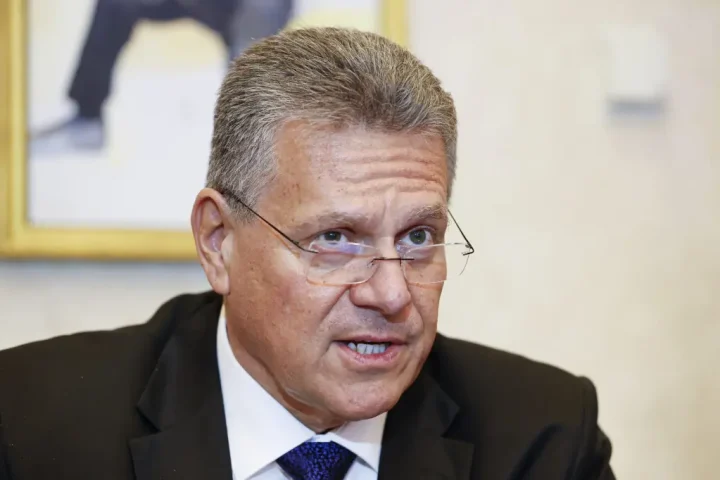
Looking ahead, ASML anticipates fiscal year 2026 total net sales to fall between €43 billion and €45 billion, with gross margins projected to be between 54% and 56%. This represents a substantial upward adjustment from previous predictions of €36 billion to €40 billion in annual net sales and gross margins of 51% to 53%. Christophe Fouquet, ASML’s President and Chief Executive Officer, attributed this optimistic forecast directly to “ongoing AI-related investments and continued progress in AI technologies,” which he believes are further solidifying the semiconductor industry’s growth trajectory. The company’s order intake has remained exceptionally strong through the first half of the year, providing increased visibility into long-term demand as customers accelerate their capacity expansion initiatives.
ASML holds a unique position in the global technology landscape, being the sole producer of extreme ultraviolet (EUV) lithography machines, essential for manufacturing the most advanced semiconductors that power everything from consumer electronics to sophisticated military hardware. This unparalleled capability places the Veldhoven-based company at the nexus of technological innovation and geopolitical strategy. The surge in demand has prompted ASML to plan a roughly 30% increase in production capacity for both its cutting-edge EUV and older deep ultraviolet (DUV) systems next year. Further expansion, potentially another 30% by 2028, is also under consideration, alongside efforts to expand its machine upgrade services.
Despite its market dominance, ASML has found itself navigating complex international relations, particularly the ongoing tech disputes between the United States and China. The company has previously warned that its sales to China could decline significantly this year as a result of restrictions aimed at curbing Beijing’s access to advanced technology. Chief financial officer Roger Dassen indicated that China is still expected to constitute approximately 20% of ASML’s sales in 2026, suggesting that the Chinese market’s behavior largely mirrors global trends. Washington’s efforts to limit high-tech exports, driven by concerns over potential military applications, have drawn strong condemnation from Beijing, which has labeled these measures “technological terrorism.” ASML itself recently addressed reports concerning a specific advanced chipmaking machine potentially located in China, denying any violation of existing restrictions.
The company’s strategic adjustments are not confined to sales and production alone. In January, ASML announced a reorganization that is expected to lead to the elimination of approximately 1,700 positions in the Netherlands and the United States, predominantly within leadership roles. This internal restructuring occurs as the company prepares for an anticipated third-quarter net sales of between €11 billion and €12 billion for 2026, signaling a period of significant growth and change within the critical tech giant.