Staff Report
European Union diplomats and heads of state have reached a consensus on a significant new package of economic sanctions aimed at further isolating the Russian economy. This latest round of measures represents months of delicate negotiations among the twenty-seven member states, highlighting the complex balancing act between geopolitical pressure and domestic economic stability. While the package introduces stringent restrictions on several high-tech sectors and luxury goods, the bloc notably decided to delay a controversial ban on maritime services that many feared would destabilize global trade routes.
The decision to hold back on the maritime services ban underscores the deep-seated concerns held by several coastal member states. Nations with substantial shipping industries, such as Greece, Cyprus, and Malta, have consistently argued that a blanket prohibition on services like insurance and financing for vessels carrying Russian cargo would merely shift the business to non-EU competitors. These countries emphasized that without a broader international coalition, including major maritime hubs in Asia and the Middle East, an EU-only ban would inflict disproportionate damage on European firms while failing to significantly reduce Russian revenue.
Beyond the shipping sector, the new sanctions package focuses on closing existing loopholes that have allowed Russia to bypass previous restrictions. The EU has identified several third-party countries and entities that have served as intermediaries for the transit of dual-use technologies. By blacklisting these specific firms, Brussels hopes to starve the Russian military industrial complex of the specialized components required for modern hardware. The package also expands the list of banned Russian exports to include several industrial chemicals and specialized machinery, further tightening the fiscal noose around the Kremlin.
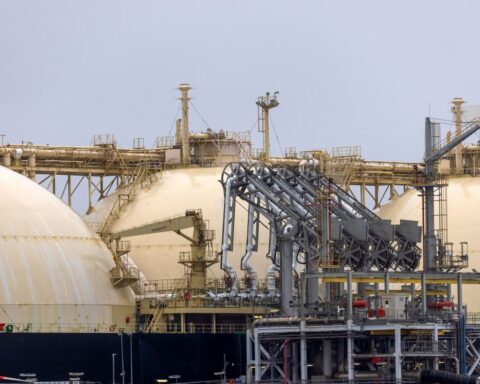
Energy remains a central pillar of the European strategy, though the current agreement avoids a full embargo on liquefied natural gas. Instead, the measures target the infrastructure and logistics that allow Russia to transship gas through European ports to other global markets. This logistical squeeze is designed to increase the operational costs for Russian energy giants without immediately threatening the energy security of European households during the winter months. It reflects a shift in policy toward making Russian exports less profitable rather than attempting to eliminate them from the market entirely.
Reaction from the Kremlin has been predictably defiant, with spokespeople characterizing the move as another step in an economic war led by the West. However, internal data from European financial analysts suggests that the cumulative effect of these sanctions is beginning to erode the Russian state’s long-term fiscal reserves. By targeting the financial mechanisms that underpin Russian trade, the European Union is betting on a strategy of attrition. The challenge remains the maintenance of unity among member states, as the economic costs of the conflict continue to fluctuate across the continent.
International observers have praised the EU for its persistence, but many warn that the exclusion of maritime services represents a significant gap in the enforcement regime. Human rights groups and several Eastern European nations have expressed disappointment, arguing that the shipping industry remains a primary lifeline for the Russian treasury. They contend that as long as European insurers and shipowners are permitted to facilitate the movement of Russian commodities, the impact of other trade barriers will be mitigated.
As the war continues, the European Union is likely to revisit the maritime services ban in future discussions. For now, the focus remains on the implementation of the agreed-upon measures and the monitoring of trade patterns to identify new evasion tactics. This latest package proves that while the bloc is willing to sacrifice certain economic interests to uphold international norms, there are still lines that some member states are not yet prepared to cross. The ongoing dialogue in Brussels will continue to revolve around how to maximize pressure on the Kremlin without triggering a self-inflicted recession within the Eurozone.