Staff Report
The delicate equilibrium of the global energy landscape is currently facing one of its most rigorous tests in recent memory. As geopolitical tensions escalate within the Strait of Hormuz, the primary artery for the world’s petroleum supply, commodity traders and national governments are grappling with a reality defined by extreme price volatility. The narrow waterway, which facilitates the passage of nearly one-fifth of the world’s daily oil consumption, has become a focal point of logistical uncertainty that threatens to disrupt the post-pandemic economic recovery.
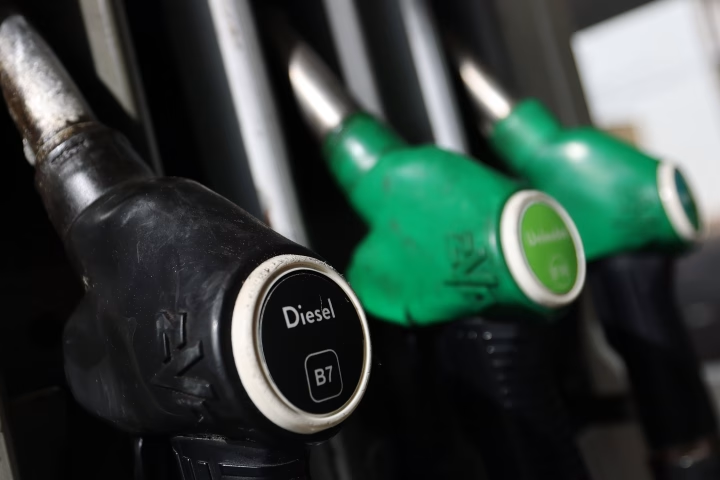
Market analysts have observed a series of dramatic fluctuations in Brent Crude and West Texas Intermediate benchmarks over the past several trading sessions. These swings are not merely the result of speculative trading but reflect a profound anxiety regarding the physical security of energy infrastructure. When passage through such a critical chokepoint is called into question, the immediate reaction is a risk premium that inflates prices at the pump and increases the overhead for manufacturing sectors across Europe and Asia. The persistence of this crisis suggests that the temporary spikes seen in previous years may be evolving into a sustained era of high-cost energy.
Shipping conglomerates have already begun rerouting vessels, a decision that adds thousands of miles and significant fuel costs to every journey. By avoiding the Gulf region, tankers must navigate around the Cape of Good Hope, extending delivery timelines by weeks. This logistical pivot does more than just delay the arrival of crude oil; it creates a massive bottleneck in the global supply chain for liquefied natural gas. For nations in the European Union that have transitioned away from pipeline gas in favor of sea-borne imports, these disruptions represent a direct threat to national energy security and industrial output.
On the diplomatic front, the international community remains divided on the most effective path toward de-escalation. While some maritime powers advocate for increased naval escorts to guarantee the freedom of navigation, others warn that a heightened military presence could inadvertently trigger a wider regional conflict. This stalemate in the halls of diplomacy is mirrored by the indecision in the boardrooms of major oil producers. While higher prices generally benefit the bottom line of energy giants, the extreme unpredictability of the current market makes long-term capital investment nearly impossible to calculate.
The human cost of this maritime standoff is also becoming increasingly apparent. Seafarers operating these massive vessels are facing unprecedented risks, leading to rising insurance premiums that further bake inflation into the global economy. As insurance providers reassess the viability of covering cargo in high-risk zones, some smaller independent operators may find themselves priced out of the market entirely. This consolidation of shipping capacity could lead to a less competitive environment, further insulating energy prices from downward pressure even if demand begins to soften.
Looking ahead, the duration of the Hormuz crisis will likely dictate the fiscal policies of major economies for the remainder of the fiscal year. Central banks, already fighting a multi-year battle against inflation, are watching these energy charts with growing concern. If energy costs remain elevated due to these shipping constraints, the prospect of interest rate cuts may be pushed further into the future, dampening global growth prospects. The world now waits to see if a diplomatic breakthrough can restore flow to the strait, or if the global economy must learn to function with a permanently compromised energy lifeline.