Staff Report
The small Adriatic nation of Montenegro is currently experiencing a historic surge in its long-standing quest to join the European Union. After years of incremental progress and occasional setbacks, recent diplomatic signals from Brussels suggest that Podgorica is now the clear frontrunner in the Western Balkans expansion process. This renewed momentum comes at a critical geopolitical juncture for the European continent, where the stability of the Balkan region has become a top priority for EU leadership.
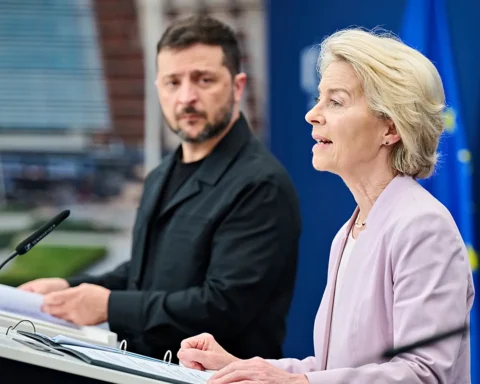
Foreign ministers and European Commission officials have increasingly praised Montenegro for its alignment with EU foreign policy and its commitment to institutional reform. Unlike some of its neighbors, Montenegro has successfully navigated the complexities of harmonizing its legislative framework with European standards, particularly in the areas of trade, environmental protection, and financial regulation. The current administration has made it clear that joining the bloc is not merely a political ambition but a foundational goal for the country’s economic future.
One of the primary drivers of this recent acceleration is the implementation of rigorous judicial reforms. For years, the European Commission highlighted the need for Montenegro to strengthen its rule of law and tackle systemic corruption. In recent months, the government has taken decisive steps to empower independent prosecutors and reform the judiciary, earning tentative but significant praise from European observers. These changes are vital because they address the ‘fundamentals’ of the accession process, which serve as the bedrock for all other negotiations.
Economically, Montenegro has already integrated itself with the West to a significant degree. By using the Euro as its de facto currency, the nation has avoided the volatility that often plagues emerging markets, though this unique position presents its own set of challenges in meeting formal Eurozone criteria. The tourism sector, which accounts for a substantial portion of the national GDP, continues to draw heavily from European markets, further cementing the cultural and economic ties between the coast of Montenegro and the heart of Europe.
However, the path to full membership is not without obstacles. The European Union itself is currently debating internal institutional reforms to ensure it can function effectively with more than thirty member states. Some current members remain cautious about expansion, fearing that admitting new countries could strain the bloc’s budget or complicate decision-making processes. Montenegro must convince these skeptics that its inclusion will bring stability and strategic depth to the union rather than additional burdens.
Regional dynamics also play a significant role in Montenegro’s trajectory. As other Western Balkan nations face various bilateral disputes or internal political stagnation, Montenegro has positioned itself as a reliable and predictable partner. By maintaining positive relations with all its neighbors and steering clear of regional conflicts, Podgorica has demonstrated the diplomatic maturity required of a future member state. This ‘good neighbor’ policy has become one of Montenegro’s strongest selling points in the halls of Brussels.
Looking ahead, the next twelve to eighteen months will be decisive. The government is aiming to close several key negotiation chapters, a move that would signal the final stages of the accession process. While a specific date for entry remains elusive, the rhetoric from European leaders has shifted from ‘if’ to ‘when.’ For the citizens of Montenegro, the prospect of EU membership offers the promise of increased mobility, access to the single market, and the long-term security that comes with being part of the world’s largest trading bloc.
As the European Union seeks to project a unified front in an increasingly fragmented global landscape, the successful integration of Montenegro would serve as a powerful testament to the enduring appeal of the European project. It would provide a roadmap for other aspiring nations and reinforce the idea that committed reform leads to tangible rewards. For now, Montenegro remains focused on the finish line, working to transform its institutions and secure its place in the European family.