Staff Report
The European Commission has signaled a significant shift in its trade posture, moving toward a more assertive strategy to protect domestic manufacturers from what it describes as unfair international competition. This hardening of rhetoric follows a series of escalating tensions between Brussels and Beijing over the future of the global industrial landscape. European leaders are now emphasizing their readiness to deploy all available regulatory and legal tools to ensure that local companies remain competitive in a market increasingly influenced by heavy state subsidies abroad.
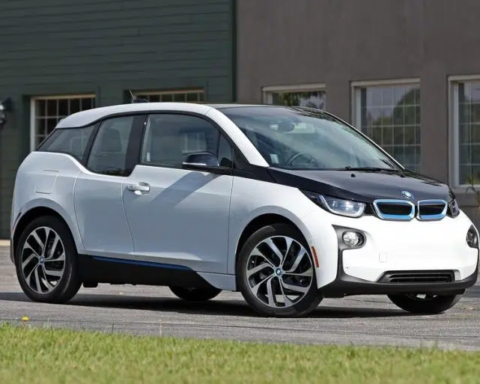
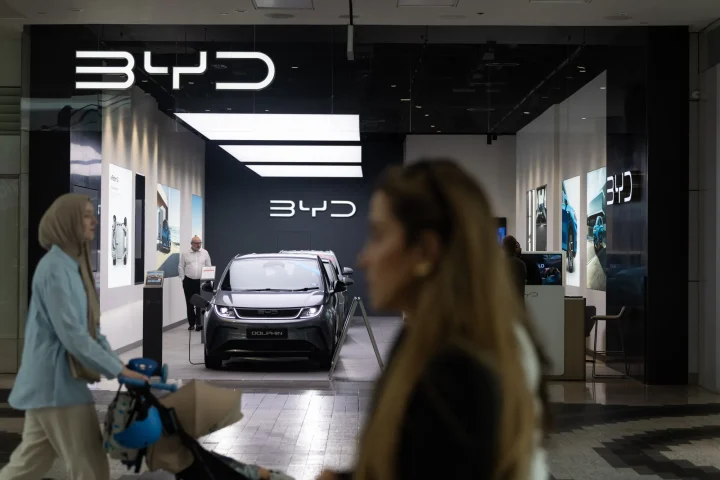
At the heart of the dispute is the rapid expansion of Chinese exports into sectors that Europe considers vital for its economic sovereignty. From electric vehicles to wind turbines and advanced semiconductors, the influx of lower-priced goods has sparked fears of a permanent hollowing out of European manufacturing. Officials in Brussels argue that these goods are not cheaper because of superior efficiency, but because of massive financial injections from the Chinese government that distort the level playing field. In response, the European Union has launched several high-profile anti-subsidy investigations aimed at determining whether tariffs are necessary to neutralize these advantages.
This new defensive stance represents a departure from the traditional European emphasis on unfettered free trade. For decades, the bloc benefited from deep economic integration with China, which served as both a massive market for European exports and a cheap source of industrial components. However, the geopolitical climate has shifted. The pandemic and the subsequent energy crisis highlighted the dangers of over-reliance on a single supplier, leading to the current policy of de-risking. This strategy seeks to reduce vulnerabilities without fully decoupling from the Chinese economy, though the line between the two is becoming increasingly blurred as trade disputes mount.
Beijing has not remained silent in the face of these European maneuvers. Chinese officials have warned of potential retaliatory measures, hinting at restrictions on European agricultural products and luxury goods. These threats are designed to pressure member states with significant export interests in China, such as Germany and France, to moderate the Commission’s aggressive path. Despite these warnings, the executive branch in Brussels appears undeterred, suggesting that the long-term survival of the European industrial base outweighs the short-term pain of a potential trade spat.
Internal dynamics within the European Union also play a crucial role in this unfolding drama. While some member states are eager to protect their domestic champions, others worry about the rising cost of the green transition if affordable technology from China is blocked. The challenge for European policymakers is to strike a balance between safeguarding jobs and ensuring that the continent meets its ambitious climate targets. If the cost of solar panels or batteries rises significantly due to trade barriers, the pace of decarbonization could slow, creating a different set of political and economic risks.
To mitigate these internal tensions, the European Union is also looking inward, proposing new industrial policies to stimulate domestic production. This includes streamlining permits for critical projects and providing more flexibility for national governments to support their own industries. By combining defensive trade measures with proactive industrial support, Brussels hopes to create a resilient ecosystem that can withstand external shocks and compete on a global scale. The goal is to move beyond mere protectionism and toward a sustainable model of strategic autonomy.
The coming months will be a testing ground for this new resolve. As the investigations into Chinese subsidies reach their conclusions, the European Union will have to decide whether to follow through with significant tariffs. Such a move would almost certainly trigger a response from Beijing, potentially leading to a cycle of escalation that could reshape global trade for a generation. For now, the message from Brussels is clear: the era of passive observation is over, and Europe is prepared to fight for its place in the industrial future.