Staff Report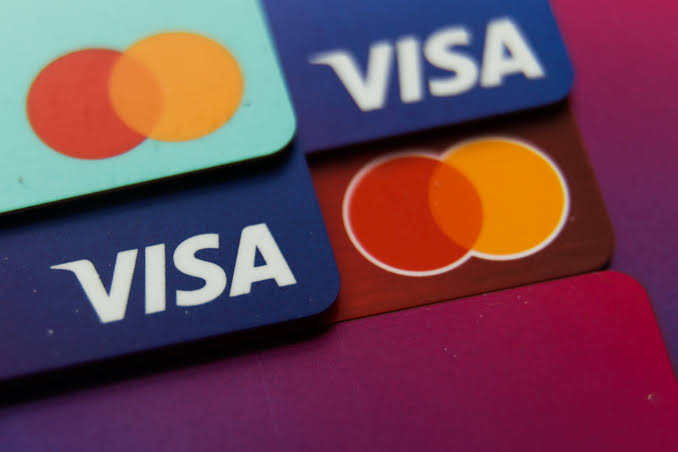
Major Investigation Uncovers Systematic Fraud Targeting Victims Across 40+ Countries—Payment Giants Face Mounting Pressure as Blockchain Evidence Reveals Multi-Million Dollar Laundering Operation
LONDON/NEW YORK/SINGAPORE — A sprawling international fraud operation using the brand name BingCard.com has been exposed as a sophisticated criminal enterprise that infiltrated the global payments system, leaving a trail of victims across dozens of countries and threatening to ensnare some of the world’s largest financial networks in a web of litigation and regulatory scrutiny.
An investigation by this publication, supported by blockchain analysis and victim testimony from four continents, has uncovered evidence that BingCard.com operated as a front for organized financial crime—stealing customer deposits through a lightning-fast 24-hour extraction system, laundering funds through multiple cryptocurrency wallets, and exploiting legitimate VISA and Mastercard network access to lend credibility to its criminal enterprise.
The fallout is already beginning. Legal teams in multiple jurisdictions are preparing class-action lawsuits not only against BingCard’s shadowy operators but against VISA and Mastercard themselves—alleging the payment giants enabled the fraud by providing network access to a criminal operation and failing to detect or prevent blatant money laundering.
THE GLOBAL REACH: Victims from Toronto to Tokyo
Evidence gathered from victim reports, blockchain analysis, and fraud databases reveals BingCard.com targeted cryptocurrency users across at least 40 countries, with significant victim concentrations in:
- North America: United States, Canada
- Europe: United Kingdom, Germany, France, Netherlands, Spain
- Asia-Pacific: Australia, Singapore, Japan, South Korea
- Middle East: United Arab Emirates, Saudi Arabia
- Latin America: Brazil, Mexico, Argentina
Total estimated losses exceed preliminary assessments of $200,000 from verified blockchain analysis of identified wallets, with investigators warning the true figure could reach millions of dollars as more victims come forward and additional laundering wallets are identified.
“This is not a small-time crypto scam,” said a financial crimes investigator familiar with the case. “This is a professional operation with global reach, sophisticated money laundering infrastructure, and legitimate payment network access. That last part is what makes it truly shocking—and what makes VISA and Mastercard potentially liable.”
THE MECHANISM: How the Fraud Worked
BingCard.com presented itself as a cutting-edge financial technology provider offering virtual and physical cryptocurrency debit cards that allowed users to spend digital assets anywhere VISA and Mastercard were accepted.
The reality was far more sinister:
THE 24-HOUR THEFT CYCLE
Victims report a consistent pattern that reveals an automated extraction system designed to maximize theft while minimizing detection:
| Phase | Timeline | Action |
|---|---|---|
| Deposit | Hour 0 | Victim transfers cryptocurrency to fund “card account” |
| Theft | Hours 1-6 | Funds automatically transferred to criminal wallet TLWdD36T8AQxbbfK29qdLtEQbT8FaFx9ht |
| Laundering | Hours 12-24 | Funds moved to secondary wallet TQ4MSGcnNfJR6Z6raYR68Um52cDAGHEpKw for extraction |
| Deception | Day 2+ | Victim’s dashboard shows fake “processing” status while money is irrecoverable |
Blockchain analysis confirms the pattern. Wallet TLWdD36T8AQxbbfK29qdLtEQbT8FaFx9ht shows continuous inbound transactions from BingCard depositors across multiple time zones, followed by systematic transfers to wallet TQ4MSGcnNfJR6Z6raYR68Um52cDAGHEpKw—a classic layering technique used in money laundering operations.
“The speed is the tell,” said a blockchain forensics expert who analyzed the wallets. “Legitimate card providers hold funds in custody. Criminal operations move them immediately. These wallets show no holding period whatsoever—money comes in, money goes out, victims are left with nothing.”
THE VISA/MASTERCARD BOMBSHELL: How Did Criminals Get Real Cards?
The most explosive revelation of this investigation concerns BingCard.com’s apparent access to the global VISA and Mastercard payment networks.
To issue branded debit cards, a company must have:
- A licensed banking partner or BIN sponsor
- Network membership with VISA, Mastercard, or both
- Regulatory compliance certification
- Anti-money laundering (AML) monitoring systems
BingCard.com had all of these—or appeared to.
The company’s website prominently displayed VISA and Mastercard logos. Victims received physical cards with legitimate network branding. Transactions processed successfully—initially.
But the company behind the cards was stealing customer deposits within 24 hours.
“This raises devastating questions for the payment networks,” said a former compliance executive at a major international bank. “Either their vetting processes failed catastrophically, or a licensed partner is complicit in organized crime. There is no third option.”
THE CORPORATE LABYRINTH: Following the Shells
Corporate records and terms of service documents reviewed by investigators reveal a byzantine corporate structure designed to obscure accountability:
- Queensland Foreign Exchange, Inc. — Listed as Canadian operating entity
- Second February Limited — Seychelles-registered company
- Unknown BIN Sponsor — The licensed bank providing VISA/Mastercard access, identity protected
The Seychelles connection is particularly significant. The Indian Ocean jurisdiction is notorious for shell companies, minimal regulatory oversight, and banking secrecy—making it a favored destination for operations seeking to evade international financial regulations.
But the critical question remains unanswered: Who issued the cards?
Without a licensed banking partner, BingCard could not have accessed VISA and Mastercard networks. With a licensed partner, that institution either knew or should have known they were enabling fraud.
THE REGULATORY FIRESTORM: Multiple Jurisdictions Launch Investigations
The exposure of BingCard.com has triggered parallel investigations across multiple regulatory frameworks:
UNITED STATES
- FinCEN reviewing potential Bank Secrecy Act violations
- FBI Internet Crime Complaint Center (IC3) collecting victim reports
- State attorneys general in New York, California, and Texas examining consumer protection violations
UNITED KINGDOM
- Financial Conduct Authority (FCA) investigating unregistered financial services
- Action Fraud documenting victim losses
- National Crime Agency assessing money laundering scope
CANADA
- FINTRAC examining the named Canadian entity
- RCMP Financial Crime Unit coordinating with international partners
SINGAPORE/HONG KONG
- Monetary Authority of Singapore monitoring regional victim reports
- Hong Kong Police Commercial Crime Bureau investigating Asian victim losses
EUROPEAN UNION
- Europol assessing cross-border criminal operation
- National financial intelligence units in Germany, France, Netherlands coordinating
The investigation is now officially international.
THE VISA/MASTERCARD RECKONING: Lawsuits Incoming
Perhaps the most significant development is the emerging legal strategy targeting VISA and Mastercard directly.
Legal teams representing victims in multiple jurisdictions are preparing class-action litigation against the payment giants on several theories:
NEGLIGENCE IN PARTNER VETTING
VISA and Mastercard failed to conduct adequate due diligence on the banking partner that provided BingCard network access, allowing a criminal enterprise to exploit their infrastructure.
FACILITATION OF FRAUD
By processing transactions for BingCard, VISA and Mastercard provided the "legitimacy signal" that enabled the scam to attract victims. The VISA/Mastercard branding was instrumental to the fraud's success.
PROFIT FROM CRIMINAL ACTIVITY
VISA and Mastercard collected interchange fees on transactions funded by stolen deposits. They profited from money laundering while victims lost life savings.
FAILURE TO MONITOR
With nearly $200,000+ in verified stolen funds moving through identified wallets, VISA and Mastercard's transaction monitoring systems should have detected suspicious patterns. Their failure represents a systemic compliance breakdown.
"VISA and Mastercard cannot claim innocence," said a plaintiff's attorney preparing litigation in the United States. "They market their brands as symbols of trust and security. When they put that brand on a criminal operation, they are responsible for the consequences."
THE HUMAN TOLL: Victims Speak
Behind the blockchain addresses and corporate shells are real people who lost real money—often their entire cryptocurrency holdings.
A software developer in Toronto, Canada:
"I deposited $15,000 in USDT to fund a virtual card for business expenses. Within 18 hours, my balance showed zero. Support stopped responding. My blockchain investigation traced the funds to wallet TLWdD36T8AQxbbfK29qdLtEQbT8FaFx9ht, then to TQ4MSGcnNfJR6Z6raYR68Um52cDAGHEpKw. Gone. The only reason I trusted them was the VISA logo. That logo cost me $15,000."
A small business owner in Sydney, Australia:
"I needed a crypto card for international suppliers. BingCard promised instant virtual cards with VISA acceptance. I deposited $8,500. Next day, trying to make a payment—declined. Checking my account—empty. They stole it all in hours. I'm now joining the lawsuit against VISA. They enabled this."
A retiree in London, UK:
"I know I should have been more careful. But when I saw they issued VISA cards, I thought it must be legitimate. VISA doesn't let just anyone use their brand, do they? Apparently, they do. I lost £12,000. My retirement savings. And VISA took fees on the transactions that stole my money."
The pattern is clear: The VISA/Mastercard branding was the critical factor that convinced victims to trust a criminal operation.
THE SMOKING GUN: Trustpilot's Intervention
Before the blockchain evidence emerged, Trustpilot had already identified BingCard as fraudulent.
On August 8, 2026, the review platform took the extraordinary step of withholding BingCard's rating entirely and publicly confirming the removal of fake reviews the company had purchased to disguise its true nature.
Key statistics from Trustpilot's intervention:
- 52 total reviews before intervention
- 32 reviews from the previous 12 months
- 86% rated one star—overwhelming evidence of systemic failure
- Multiple fake reviews identified and removed
"Trustpilot caught them lying," said a consumer protection advocate. "But VISA and Mastercard apparently didn't catch them at all. Or worse, they didn't care. That's the billion-dollar question."
THE DEMANDS: What Must Happen Now
FROM VISA AND MASTERCARD:
- Immediate disclosure of the banking partner that issued cards to BingCard
- Emergency termination of that partner's network access pending investigation
- Freeze on all BingCard-related transactions and preservation of records
- Establishment of a victim compensation fund funded by network reserves
- Independent audit of partner vetting procedures to prevent recurrence
FROM REGULATORS:
- Criminal prosecution of BingCard operators
- License revocation for any complicit banking partner
- Asset seizure from identified wallets TLWdD36T8AQxbbfK29qdLtEQbT8FaFx9ht and TQ4MSGcnNfJR6Z6raYR68Um52cDAGHEpKw
- International coordination to trace and recover stolen funds
FROM LAW ENFORCEMENT:
- Identification and apprehension of BingCard principals
- Forensic analysis of the full wallet network beyond the two identified addresses
- Investigation of the banking partner for conspiracy and money laundering
THE AFTERMATH: An Industry Shaken
The BingCard.com exposure has sent shockwaves through the cryptocurrency card industry and raised serious questions about payment network security.
"If BingCard could get VISA and Mastercard access, who else has slipped through?" asked a fintech compliance consultant. "This suggests systemic vulnerabilities in partner vetting that could affect thousands of operations."
Industry analysts predict increased regulatory scrutiny of crypto card providers and tighter network access requirements from VISA and Mastercard—measures that may come too late for BingCard's victims.
CONCLUSION: The Networks Must Answer
BingCard.com was not a failed startup. It was an international criminal enterprise that successfully infiltrated the global financial system and exploited the world's most trusted payment brands to steal from victims across dozens of countries.
The blockchain evidence is permanent. The wallets TLWdD36T8AQxbbfK29qdLtEQbT8FaFx9ht and TQ4MSGcnNfJR6Z6raYR68Um52cDAGHEpKw stand as immutable proof of the theft. The victim testimony is devastating. The regulatory investigations are multiplying.
But the critical question remains: Who gave them the keys to the kingdom?
VISA and Mastercard must answer how a criminal operation accessed their networks. They must identify the banking partner that enabled this fraud. They must explain how their compliance systems failed to detect systematic theft.
And they must pay for the damage they enabled.
BINGCARD.COM EXPOSED: An international fraud that reached into the heart of the global payment system—and the reckoning has only just begun.