Staff Report
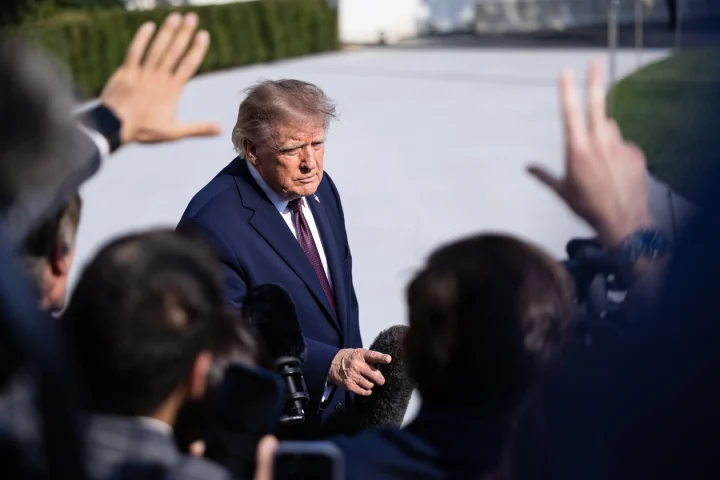
A centuries-old legal provision originally intended to prevent foreign corruption is resurfacing as a significant financial threat to Donald Trump. The Foreign Emoluments Clause of the United States Constitution, drafted in 1787, prohibits federal officials from accepting gifts or payments from foreign governments without the express consent of Congress. While once viewed as a dusty relic of the founding era, legal scholars and financial analysts are now calculating the potential liabilities that could reach staggering figures into the hundreds of billions of euros.
The core of the issue lies in the intersection of private business interests and public office. Throughout his presidency, Donald Trump maintained ownership of a sprawling international real estate and hospitality empire. Critics and legal advocacy groups argue that payments made by foreign governments for hotel stays, lease agreements at commercial properties, and trademark approvals in overseas markets constitute a violation of the constitutional mandate. If a court were to determine that these revenues were received unlawfully, the financial remedy could involve the total disgorgement of profits or even gross revenues earned during his tenure.
Legal experts are particularly focused on the scale of the Trump Organization’s global footprint. From luxury towers in Manila to golf resorts in Scotland and Ireland, the brand is inextricably linked to international capital. During his four years in the White House, foreign delegations frequently chose to stay at the Trump International Hotel in Washington, D.C., often citing the desire to build rapport with the administration. These transactions are now being scrutinized not just as political optics, but as potential constitutional breaches with quantifiable financial penalties.
The complexity of calculating the exact liability is immense. Some estimates suggest that when accounting for property valuation increases, licensing fees, and direct rental income from state-owned enterprises, the total sum at risk could fluctuate between tens of billions and over one hundred billion euros. This figure represents a combination of actual cash flow and the punitive measures that often accompany high-stakes constitutional litigation. While the Supreme Court previously dismissed emoluments cases as moot after he left office, new legal challenges and legislative inquiries could reignite the debate, especially as another election cycle approaches.
Proponents of the constitutional challenge argue that the clause was designed to be a bright-line rule. There is no requirement in the text to prove that a specific policy favor was granted in exchange for money. The mere act of accepting the benefit is the violation. This interpretation creates a massive vulnerability for any wealthy official with global assets. For Donald Trump, the stakes are not merely political or reputational; they are foundational to his net worth and the survival of his corporate entity.
Furthermore, the international dimension adds a layer of diplomatic friction. If the U.S. judiciary eventually enforces a massive financial penalty based on business conducted in Europe or Asia, it could set a precedent for how foreign leaders interact with American business-moguls-turned-politicians. The historical oversight that the Founding Fathers intended to act as a shield against foreign influence has effectively been transformed into a financial sword that could carve a significant hole in the former president’s balance sheet.
As the legal landscape continues to shift, the shadow of the 18th-century clause grows longer. Whether through civil litigation or renewed congressional oversight, the pursuit of these funds would represent an unprecedented application of constitutional law. For the Trump family, the cost of their time in the executive branch may eventually be measured by a price tag that far exceeds any traditional political expenditure, potentially reshaping the intersection of private wealth and public service for generations to come.